Thursday, October 7, 2010

Shocktober Director of the Day: David Cronenberg


Canadian director David Cronenberg has always been fascinated by horrors of the flesh and has never been shy about expressing that fascination. He made several shorts, features and Canadian television movies before his first widely distributed film, They Came from Within in 1975.

The story of mad scientist (is there any other kind) experimenting on his neighbors in a high-rise apartment complex, They Came from Within concerns a genetically engineered parasite that drives its host to a sexual (and murderous) frenzy. Using British scream queen Barbara Steele and a host of unknowns, Cronenberg's cheapie was derided as vile exploitation (which it certainly was) when it was originally released. But it had a certain style about it and the young director's potential was certainly on display:


In 1977, he made the similarly themed Rage (known in the U.S. as Rabid) starring former porn star Marilyn Chambers as a young woman whose experimental plastic surgery results in a phallic organ in her throat which drains the blood of her victims, turning them into blood-thirsty zombies, resulting in a Montreal epidemic:


For his next film, 1979's The Brood, Cronenberg managed to get two rather well-known British actors, Oliver Reed and Samantha Eggar. Reed was known for several high-profile roles in films like Oliver!; Tommy; and Women in Love (where he shares a sweaty, naked wrestling match with Alan Bates*) and Eggar was he genteel Emma Fairfax in Dr. Doolittle. So it was a bit of a coup for Cronenberg when they agreed to appear as a deranged psychiatrist and his patient who somehow manages to manifest her feelings of hatred into physical creatures who kill those she feels have wronged her. 


The final image of Eggar licking the blood off her latest "child" may well be one of the disturbing in modern horror.

But it wouldn't be until 1981's Scanners that Cronenberg's films really began to garner notice among genre fans. Starring former super model Jennifer O'Neill, Patrick McGoohan ("The Prisoner") and genre powerhouse Michael Ironside, Scanners is a story about psychic espionage and is the first movie I can think of where this happens:


Yikes!

Next came 1983's Videodrome, the first Cronenberg film Uncle P saw in a theatre. James Woods and Blondie vocalist Debbie Harry star in this tale of a television producer looking for the next big thing. When he stumbles upon a pirate S&M TV show called 'Vidoedrome,' he thinks he's found it. Of course, in typical Cronenberg fashion, nothing is really what it seems and Videodrome is little more than a front for a bizarre cult. Playing on a common Sci-Fi theme (the marriage of flesh and electronics), Videodrome is the first of several times Cronenberg explores this topic. And of course, disturbing images abound:


Next came Cronenberg's 1983 adaptation of Stephen King's The Dead Zone, one of the few movies that is actually better than than King's source material, but which still left me feeling uninvolved despite some excellent performances from Christopher Walken, Martin Sheen, Brooke Adams and Colleen Dewhurst.


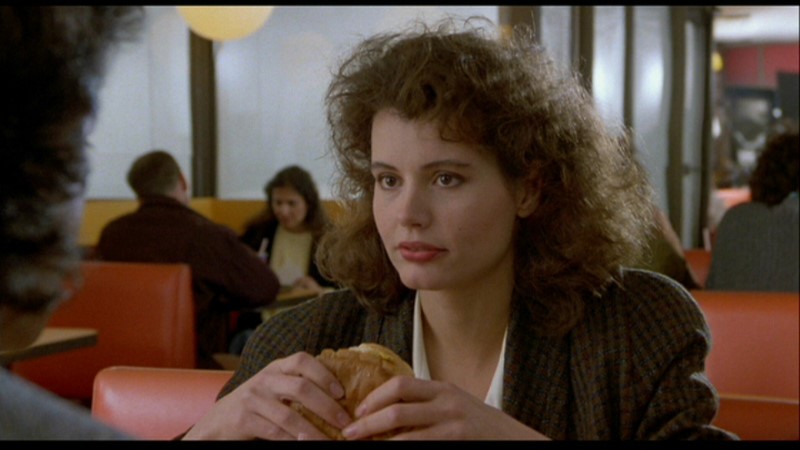
Three years later, Cronenberg made the movie that would cement his status as a Horror/Sci-Fi master forever. His remake of the 50's B-movie The Fly was a sensation and not just for it's envelope-pushing special effects. Jeff Goldblum and Geena Davis (in tragically ignored Oscar-worthy performances) play scientist Seth Brundle and science reporter Veronica Quiafe. When Seth reveals the teleportation device he's been working on to Veronica, the two of them become embroiled in a tragic romance worthy of Shakespeare. Of course, we all know that a fly is trapped along with Seth when he makes his first solo test, resulting in a mutation that would inspire nightmares (not to mention an opera) for millions of horror fans. The scene where Veronica visits Seth for the last time before he is completely dehumanized, can still make me choke up. Addressing cancer, AIDS and a slew of human foibles, The Fly touched audiences in a way Cronenberg never had before.


Cronenberg followed  The Fly with Dead Ringers, his 1988 adaptation of Bari Wood's novel "Twins," about two brilliant, but drug-addicted twin gynecologists (Jeremy Irons) who develop the worst kind of God complex:


1991 saw what may well be one of Cronenberg's most disturbing films of all time, an adaptation of William S. Burrough's supposedly unfilmable novel Naked Lunch, about an exterminator who becomes addicted to his own poisons and his journey into madness.


In 1993, Cronenberg side-stepped away from horror and adapted David Henry Hwang's play M. Butterfly, about a French diplomat who is tricked into an affair with a male Chinese opera star who is actually a spy. While not exactly a Horror movie, M. Butterfly still explores the connections between sin, flesh, deception and desire. Then came the repulsive Crash, about a group of fetishists who find sexual arousal in car accidents. Crash was the first movie I saw in a stadium theater, with most of my fellow cast mates of "Love! Valour! Compassion!" and we were all both appalled and confused by what we were seeing.  major misstep for the usually brilliant director.


1999 saw return to Cronenberg's obsession with the marriage of electronics and flesh with the virtual reality-themed eXinstenz, starring Jennifer Jason Leigh, Jude Law, Ian Holm and Willem Dafoe in a story about a video game programmer on the run from those who would use her technology for nefarious means:


2002's Spider stars Ralph Fiennes as a mental patient who escapes into his childhood to avoid the horrors of reality. It is probably Cronenberg's least successful and least well-known film to date. Since then, Cronenberg has moved on to more mainstream films, such as 2005's A History of Violence and 2007's Eastern Promises, both of which explore the psychology of crime. His upcoming film, A Dangerous Method is about the relationship between the fathers of modern psychology, Sigmund Freud and Carl Jung, Personally, I look forward to the day when Cronenberg returns to exploring both psychological and physical horror.

More, anon.
Prospero

*Link probably NSFW

Wednesday, October 6, 2010

Shocktober Director of the Day: Clive Barker


With only three feature films to his credit as a director, openly gay horror author Clive Barker has managed to create some powerfully disturbing movies.

With two short films in the 70's (Salome and The Forbidden), Barker's career as a novelist far outpaced his career as a director. Author Stephen King once described Barker as "...the future of horror," though lately his output has slowed down considerably. Still, the three major releases directed by Barker all hold special places in both Uncle P's cold black heart, and the annals of Horror film history.

His first film, 1987's Hellraiser, based on his short story "The Hellbound Heart," was a sensation when it was first released. Using then state-of-the-art special effects to tell the story of Frank, a man who, while seeking the ultimate thrill, buys a strange puzzle box and upon opening it, unleashes a sadomasochistic group of cenobites from hell. After they literally drag him to hell, his brother's family moves into his house, where the accidental spilling of blood brings Frank back, though less than complete and hungry for blood:


Aided by Christopher Young's magnificently creepy waltz, Barker takes a page right out of Cronenberg and uses reverse images, physical puppetry and plenty of weird sound effects to produce what was a rather startling scene in 1987. The skinless Frank draws his former lover (now sister-in-law) Julia into his scheme to lure unsuspecting men to the house so he can drain their bodily fluids in an effort to complete himself. But his niece Kirsty has found the puzzle box and the cenobites are trying to lure her to hell, as well.


Of course, by the time Frank has skinned his own brother, the cenobites have finally caught up with him and this happens:


Sorry about the poor quality there, but it was the only full version I could find of that scene.

Hellraiser went on to spawn several increasingly silly sequels and gave rise to the iconic villain Pinhead. A new sequel is scheduled to be released sometime next year, though a Barker-produced reboot is also scheduled for 2012.

For his next film, 1990's Nightbreed, Barker turned to his novel "Cabal," about a young man who discovers he is part of a group of monstrous-looking mutants who have been targeted by a monstrous-acting serial killer. Craig Scheffer (A River Runs Through It) stars and in a stroke of genius casting, David Cronenberg plays the serial killer. Weird and unsettling, Nightbreed didn't enjoy the same success as Hellraiser, but I have always found it to be a fascinating movie.


On a side note, I share 1 degree of separation with Scheffer, who was a college roommate of my dear friend, Sci-Fi geek and fellow director, Dan S.

Barker's last (and for my money, best) feature was 1995's Lord of Illusions. Sexy Scott Bakula ("Quantum Leap") stars as Barker's recurring character Harry D'Amour, a private detective who specializes in weird cases. When famous magician Phillip Swann (Kevin J. O'Connor) is killed while performing a particularly dangerous illusion, Swann's widow (X-Men's Famke Janssen) hires D'Amour to investigate. The trail leads back to a strange cult led by the deceased Nix (character actor Daniel von Bargen), who had taught Swann "real" magic and whose resurrection is being attempted by his rabid followers.


Noirish and weird, Lord of Illusions was probably a bit too esoteric for most audiences, though I find it fascinating every time I watch it. And Barker's highly improved directorial skills are best on display here. 

There are plenty of film adaptations of Barker's stories and novels, most recently The Midnight Meat Train (starring hottie Bradley Cooper); Book of Blood and the announced Thief of Always. Barker is scheduled to return to directing with an adaptation of his novella Tortured Souls: Animae Damnatea in 2011. I, for one, can't wait.

More, anon.
Prospero

PS - I've been holding onto the image at the top of this post forever, just waiting for the perfect time to use it. So glad I did...

Tuesday, October 5, 2010

Shocktober Director of the Day: Tod Browning


From 1915 to 1939, Tod Browning made 62 films. But he is most remembered for two particular horror movies, which I'll talk about soon enough.

Not much is known about Browning's first film, a 1915 short called The Lucky Transfer, other than the date it was released and the names of some of its cast members. Browning made 11 short films that year, with titles like An Image of the Past; The Story of a Story; The Electric Alarm and Little Marie. His first full-length feature, 1916's The Fatal Glass of Beer starred Elmo Lincoln, the first actor to play Edgar Rice Burrough's Tarzan. Only stills and snippets remain of these early silent films, and little is known about their plots, though the titles are good indicators of what they were probably about. From 1917 to 1924, Browning cranked out another 27 movies that are mostly lost to history. 

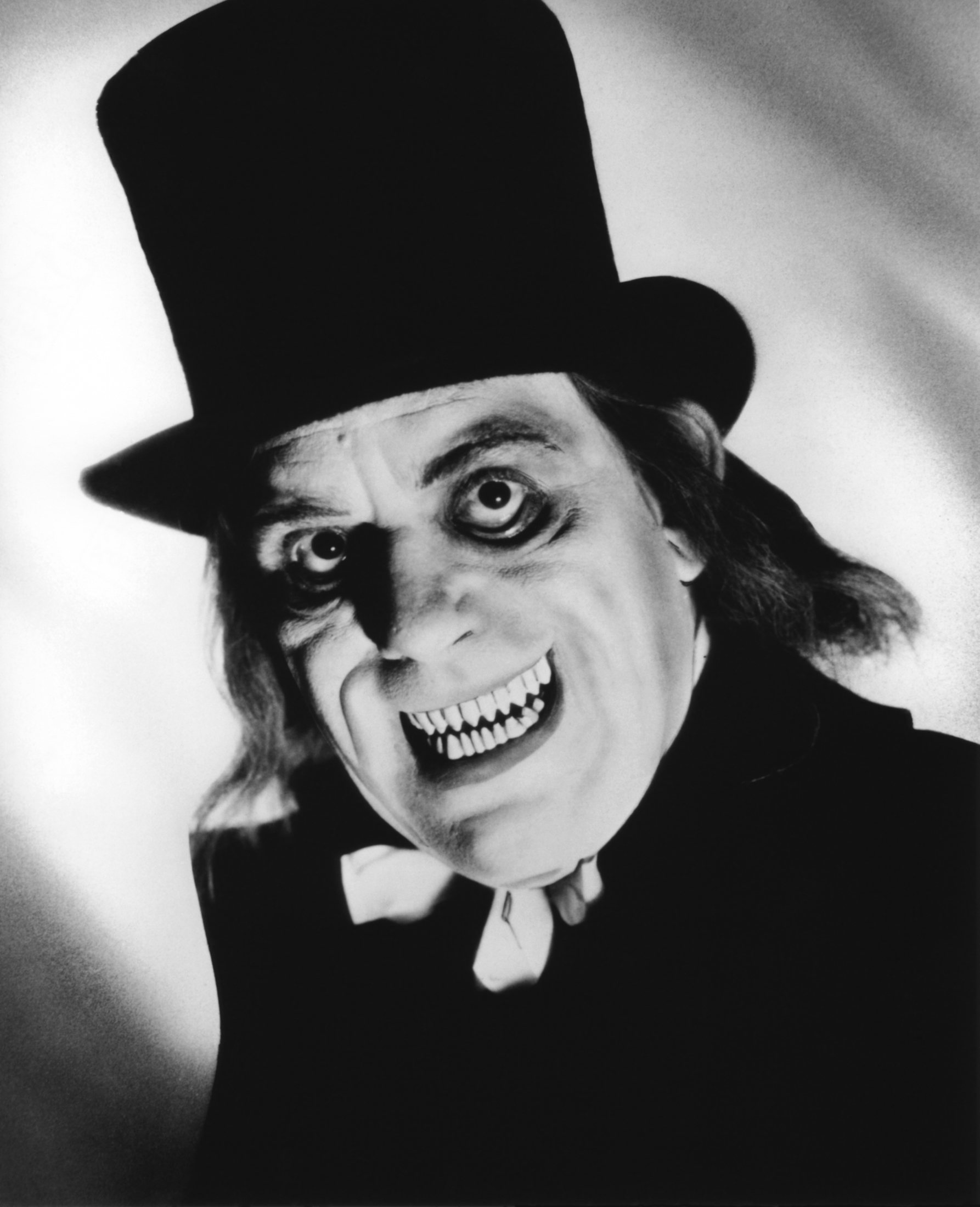
Then, in 1925 he was assigned a film with the legendary "Man of a Thousand Faces," Lon Chaney. The Unholy Three was story about three circus performers (a theme Browning would explore more than once, having grown up in the circus) who escape their lives of servitude and set about creating a crime wave from a bird shop run by a ventriloquist disguised as an old lady (Chaney). Browning and Chaney collaborated on 8 films, including the long-lost vampire thriller London After Midnight, which Browning remade in 1935 as Mark of Vampire, starring the legendary Lionel Barrymore.

Of course, it wasn't until 1931 that Browning made his indelible mark on film history with his version of the Deane/Balderston stage adaptation of Bram Stoker's Dracula, starring Hungarian actor Bela Lugosi reprising the role that had made him a star in America. While I personally find the Spanish-language version (filmed on the same sets after the American crew was done for the day) to be a better film, Browning's movie is still a masterful film, using light and shadow most effectively and exploiting the then charismatic Lugosi's talents most effectively. It is the first horror movie I can remember seeing and it turned Uncle P into the horror junkie he is today.


Almost 80 years have passed and the film remains a Classic. We may laugh at the hokey acting and decidedly quaint special effects, but Lugosi's performance and Browning's use of light  and shadow are still studied in film classes all over the world.

Browning's next film, Iron Man starred Lew Ayres as a boxer trying to win back the woman he loved. A rather standard early 30's melodrama, Iron Man pales in comparison to Browning's best works. 1932 saw Browning's most controversial (and probably best) film, Freaks.

Freaks tells the story of an ambitious trapeze artist named Cleopatra (Olga Baclanova) who marries Hans, a little person who is the star of the circus' sideshow. When Hans' fellow sideshow performers discover that she only married him for his money, they exact a terrible revenge on Cleopatra, transforming her into a sideshow freak named "The Feathered Hen." Using actual sideshow performers such as the microcephalic Schlitze and conjoined twins the Hilton Sisters (themselves the subject of the highly underrated musical Sideshow), Freaks was derided as exploitative and disturbing and was banned in the U.S. for almost 40 years. The trailer below is a fan-made remix, but it certainly conveys the surreal atmosphere Browning manages to impart in this bizarre and unsettling film:

After Mark of the Vampire, Browning made The Devil Doll, again starring Lionel Barrymore (who dons full drag as a kindly old doll-maker). The movie is about an escaped convict (Barrymore) who uses miniaturized humans to exact revenge against those who he thinks have wronged him.


Browning's last film, 1939's Miracles for Sale, tells the story of a magician's illusion designer (future 'Father Knows Best' star, Robert Young) who specializes in debunking fake psychics and mediums. It is mostly forgotten. Browning, who began his show business career as a circus dancer and clown, made his acting debut in D.W. Griffith's Intolerance. He died in 1962 at the age of 82. Dracula and Freaks remain among the most well-known horror films of all time and continue to influence writers and directors to this day.

More, anon.
Prospero

Monday, October 4, 2010

Shocktober Director of the Day: Tobe Hooper


In 1974, former college professor and budding filmmaker Tobe Hooper directed and co-wrote a low budget horror movie that took audiences by storm, terrifying millions without showing any actual on-screen violence. The Texas Chainsaw Massacre introduced audiences to Leatherface, the first seminal horror villain since Norman Bates. Of course, the two characters share more than instant recognition - they were both based on real-life maniac Ed Gein. Relying on sound effects and the audience's imagination, TCM was an underground hit and audiences swore they saw way more than Hooper ever actually filmed. TCM tells the story of a group of teenagers on their way to visit their grandfather's grave who pick up a rather hysterical hitchhiker and end up in the clutches of a family of cannibals. Hooper's $83,000 film has so-far grossed over $30M and has been since remade with more gore and less critical acclaim.


Hooper's next movie, 1977's Eaten Alive, about a psychotic Louisiana hotelier who has a penchant for feeding his guests to his pet alligator was not quite as successful, but still has an off-kilter sense of the bizarre which makes for an interesting, if not quite as scary, ride:


In 1979, Hooper got a big break with the TV adaptation of Stephen King's Salem's Lot, about vampires invading small town America. Horribly miscast and employing 50 year-old visuals, Salem's Lot ultimately fails (as do most King adaptations) due to it's silliness factor. While King may terrify on the page, his works don't always lend themselves to the screen, and that's very obvious in Hooper's ambitious but un-scary version:


Hooper made another silly monster movie in 1981, The Funhouse in which a deformed circus freak terrorizes a group of teens who are dared into spending the night in a carnival dark ride. Depressing and poorly acted, The Funhouse is probably one of Hooper's worst films. It would be followed the next year by one of his best -- and certainly his most successful film, 1982's Poltergeist, a movie Uncle P and his sister can quote almost line for line and which Uncle P can tell you exactly what's happening just by listening to it's soundtrack. Stephen Spielberg served as producer and his influence can be seen in shot after shot, but the tension and terror are pure Hooper:


Hooper then made the under-appreciated "Vampires from Space" zombie movie Lifeforce and an ironic remake of the 1950's Sci-Fi thriller Invaders from Mars, before making hat I think is his best and most terrifying film The Texas Chainsaw Massacre 2. A sequel that's better than the original, TCM2 is one of maybe three films that made Uncle P feel like he was a part of someone else's nightmare. Set mostly in the underground tunnels of an abandoned amusement park, TCM2 features more disturbing performances and images than anything in recent horror history. It it also one of the few films I cannot bring myself to see a second time:


Since then, Hooper has made a string of rather unremarkable films, including Spontaneous Combustion; The Mangler (another lame King adaptation); the poor "X-Files" clone "Dark Skies" and The Toolbox Murders, a film which many horror fans love, but I find to be rather derivative and beneath his best works. I do, however, have high hopes for Tobe's upcoming adaptation of King's From a Buick 8, a novel that figures among King's alternate universe stories found in "The Talisman" and "The Gunslinger."

Hooper's prolific career as a director has certainly had its ups and downs, but he will always be remembered for at least two of the genre's best films. And that's why he's included in this Shocktober's list of Best Horror Directors.

More, anon.
Prospero

Saturday, October 2, 2010

Two More Things

I have some more messages for those of you who are feeling alone and afraid. First this:


 And then, this:


I've been there. And I got through it, because I knew it had to get better. And it did. And it will for you, too. There are plenty of folks out there you care about you and want you to live your life to its fullest potential. Don't let the assholes win.

And if you want to talk to someone anonymously, leave me a message. I promise I know what you're going through. And plenty of others do, too. And we care.

Prospero

Friday, October 1, 2010

Shocktober Preview


Well, between Top Girls and my anti-bullying diatribe, I very nearly forgot all about Shocktober.

I have a list all ready to go of the Horror Movie Directors I want to talk about this month, and I will hopefully get to all of them, just not until Sunday, probably. Of course, I'll hopefully be tossing in my reviews of Let Me In, Case 39 and a few others as they come along. I just won't be able to be as obsessive about getting in a post a night, this year. And really, a little less obsession is probably a good thing.

So, until we start in earnest: BOO!
More, anon.
Prospero

Enough Is Enough


This is a picture of Rutgers University student Tyler Clementi, who committed suicide after his roommate and a friend web-casted Tyler and another man in an intimate moment. The 18 year-old jumped to his death from the George Washington bridge after he found out about the betrayal.

Clementi is the latest in a string of recent suicides among gay teens who have been mercilessly bullied into taking their own lives.

CNN posted the story below today, noting that those involved have been charged with "Invasion of Privacy." Personally, I think they should be charged with Hate Crimes and Involuntary Manslaughter, at the least:


13 year-old Seth Walsh of California; 15 year-old Billy Lucas of Indiana and 13 year-old Asher Brown of Texas have all recently committed suicide because of homophobic bullying by their classmates. These are children whose lives should have just been beginning, not ending. In Ohio, 11 year-old Tyler Wilson had his arm broken by bullies because he was a cheerleader. What the hell? Are Americans raising an army of homophobic monsters? Why? 

I really don't understand, because the young straight people I know are all perfectly sane, rational folks who agree that this is an epidemic that is quickly getting out of control. And it's certainly not something we can just chalk up to "Kids will be kids." Because the truth is, kids will be what their parents teach them to be. Nearly 70 years ago, Rogers and Hammerstein wrote a song for the musical South Pacific called "Carefully Taught," in which they very clearly say that hatred and bigotry are instilled, not innate. And while at the time they were specifically talking about racism, the message rings true for any minority:


And at the usually hilarious Kindertrauma, blogger Unkle Lancifer posted this diatribe about bullying and the 1977 Brian DePalma classic, Carrie. Not nearly as silly (and far angrier) than one might expect. And the undisputed Queen of the Gays, Ellen Degeneres, addressed the issue on her daily talk show today. I dare you to watch without getting as choked up as she does:


My question is, where are the teachers and administrators in all of this? The parents of all three younger boys say they repeatedly called their children's schools to complain, only to be met with empty platitudes. Are teachers so scared of these bullies themselves? Or are they just as hatefully homophobic? We can blame the Fred Phelpses and Maggie Gallaghers of the world all we want, but the ultimate responsibility for these reprehensible behaviors lies solely with the parents of the children committing them. sadly, the messages sent by groups like NOM and the Westboro Baptist Church seem to be taking hold, and that's something we must stop now, before it's too late.

Gay kids are 4 times more likely to commit suicide than straight kids, and far less likely to seek help when feeling suicidal. If you, or someone you know is considering suicide because of anti-gay bullying, I urge you call the Trevor Project, 24/7, at 866-488-7386. You are not alone. You are loved and you are worth keeping around. It gets better. I promise.

My heart goes out to all the families of these (and all) young folks who have suffered because of their sexuality, whether real or perceived. 

More, anon.
A very saddened Prospero